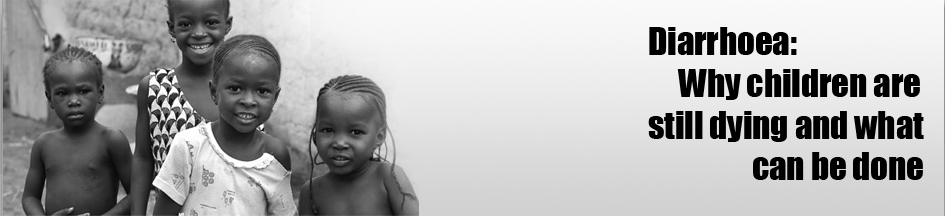
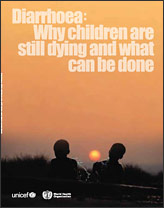
Diarrhoea: Why children are still dying and what can be done
Diarrhoea is the second leading cause of death among children under five globally. Nearly one in five child deaths – about 1.5 million each year – is due to diarrhoea. It kills more young children than AIDS, malaria and measles combined. Today, only 39 per cent of children with diarrhoea in developing countries receive the recommended treatment, and limited trend data suggest that there has been little progress since 2000.
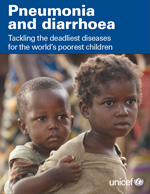
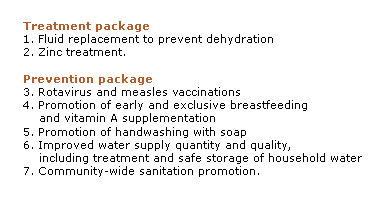
The objective of this WHO/UNICEF report is to focus attention on the prevention and management of diarrhoeal diseases as central to improving child survival. It examines the latest available information on the burden and distribution of childhood diarrhoea. It also analyses how well countries are doing in making available key interventions proven to reduce its toll. Most importantly, it lays out a new strategy for diarrhoea control, one that is based on interventions drawn from different sectors that have demonstrated potential to save children's lives. It sets out a 7-point plan that includes a treatment package to reduce childhood diarrhoea deaths, as well as a prevention package to make a lasting reduction in the diarrhoea burden in the medium to long term.
"It is a tragedy that diarrhoea, which is little more than an inconvenience in the developed world, kills an estimated 1.5 million children each year", said UNICEF Executive Director Ann M. Veneman.
"We know where children are dying of diarrhoea", said WHO Director-General Dr. Margaret Chan. "We know what must be done to prevent those deaths. We must work with governments and partners to put this seven-point plan into action."
Did you know?
Oral rehydration therapy and continued feeding is a life-saving treatment, which only 39 per cent of children with diarrhoea in developing countries receive. Limited data show little progress since 2000.
Zinc tablets are still largely unavailable in most developing countries, although their effectiveness in reducing the severity and duration of diarrhoea episodes is well known.
Immunization against rotavirus, which results in an estimated 40 per cent of hospital admissions due to diarrhoea among children under five, is urgently needed worldwide, especially in Africa and Asia.
Safe water, adequate sanitation and proper hygiene are too often forgotten foundations of good health. Handwashing with soap alone could potentially reduce the number of diarrhoea cases by over 40 per cent.
Breastfeeding is
critical to both the prevention and treatment of diarrhoea. Infants who are exclusively breastfed for the first six months of life and continue to be breastfed until two years of age and beyond develop fewer infections and have less severe illnesses, including diarrhoea.
Vitamin A supplementation has been shown to significantly reduce child deaths, mostly from diarrhoea and measles.
With a substantial development of research and findings for breastfeeding over the past three decades, we are now able to expand on the health benefits for both women and children across the globe. The two papers in this Series will describe past and current global trends of breastfeeding, its short and long-term health consequences for the mother and child, the impact of investment in breastfeeding, and the determinants of breastfeeding and the effectiveness of promotion interventions.
New Research Shows That Breastfeeding Matters Everywhere and Could Save Millions of Lives and Dollars "Political commitment and investment in breastfeeding by governments, donors, employers and civil society is urgently needed to ensure the health of women and children and to shape a more sustainable future for all. UNICEF and the World Health Organization, in partnership with close to 20 organizations, are leading the charge to mobilize global action to raise political and financial investment to support breastfeeding. Together, we are working to remove barriers to breastfeeding and to give women the tools they need to make informed decisions to ensure their health and the health of their children for generations come."
Werner Schultink, Chief of Nutrition at UNICEF
Infant Feeding Support for Refugee Children is a group of mothers and other interested people, working as volunteers, to gather and co-ordinate support for the infants (newborns to age two years old and beyond) fleeing war and thus caught in the refugee crisis. As a group we support the WHO recommendations on Infant Feeding whereby milk, preferably mother’s milk, should be the only food given for the first six months and milk feed should be offered freely for a minimum of two years.
Goals:
• support mother & infant
• educate, train & support volunteers
• educate public
• support IYCF-E aligned groups to fundraise
8 June 2012 – Preventing and treating pneumonia and diarrhoea – the two leading causes of death among children under five – can help save the lives of more than two million children, according to a report released today by the United Nations Children’s Fund (UNICEF).
“We know what works against pneumonia and diarrhoea – the two illnesses that hit the poorest hardest,” UNICEF’s Executive Director, Anthony Lake, said in a news release. “Scaling up simple interventions could overcome two of the biggest obstacles to increasing child survival, help give every child a fair chance to grow and thrive.”
Pneumonia and diarrhoea account for nearly one-third of the deaths among children under five globally – or more than 2 million lives each year. Nearly 90 per cent of deaths from pneumonia and diarrhoea occur in sub-Saharan Africa and South Asia.
The prevention and treatments for both diseases often overlap, and include such basic steps as: increasing vaccine coverage; encouraging breastfeeding and hand-washing with soap; expanding access to safe drinking water and sanitation; and disseminating oral rehydration salts to children with diarrhoea and antibiotics to children with bacterial pneumonia.
Download pdf report
"'We, as the leaders of WHO and UNICEF, are personally committed to the achievement of MDG 4 and new targets introduced through A Call to Action and A Promise Renewed. The two agencies will work in an even closer collaboration to support countries to achieve universal coverage of effective interventions - and effectively put an end to preventable child deaths."
Thanks in large part to the increased attention to maternal and child survival brought about by the Millennium Development Goals (MDGs), the world has made substantial progress in reducing child mortality over the past two decades. The number of deaths among children younger than 5 years has declined from more than 12 million in 1990 to 7·6 million in 2010. The mortality rate in children under 5 years has dropped from 88 deaths per 1000 livebirths in 1990 to 57 in 2010—a 35% reduction. The rate of decline in the under 5 mortality rate has accelerated from 1·9% a year from 1990 to 2000 to 2·5% a year from 2000 to 2010. The rate of reduction has doubled in sub-Saharan Africa. These gains underline the importance of having clearly defined targets, especially when they are combined with mechanisms for monitoring progress, ensuring equity, and promoting accountability.
Using zinc supplements to treat diarrhoea, along with oral rehydration salts, not only helps children get better faster, it can even save their lives.
Zinc - one of the more abundant elements on earth - has quickly emerged as an exciting new opportunity in the urgent quest to drastically reduce the number of global child deaths by the 2015 target for the Millennium Development Goals. When administered in conjunction with oral rehydration therapy (ORT), zinc has proven itself to be the most powerful tool to help children combat and recover from diarrhoeal disease.
More than that, it has demonstrated important preventive power, helping children resist subsequent episodes of diarrhoea for up to three months, thereby reducing the number of episodes a child suffers each year and giving children more time to recuperate. In scientific terms, zinc supplementation in combination with ORT has been shown to reduce diarrhoeal incidence in children by an impressive 27%.
Update: Some good news! The Lancet is reporting that diarrhoea deaths have dropped to around 1 million per year. This is promising news and hopefully these numbers will continue to decline as we treat more children who suffer from diarrhoea with zinc and ORS.
Hesperian Health Guides is a nonprofit health information and health education source that develops accessible materials in many languages. Access free information in Hesperian's HealthWiki related to preventing and treating diarrheal diseases.







 Home
Home


 Diarrhoea is the second leading cause of death among children under five globally. Nearly one in five child deaths – about 1.5 million each year – is due to diarrhoea. It kills more young children than AIDS, malaria and measles combined. Today, only 39 per cent of children with diarrhoea in developing countries receive the recommended treatment, and limited trend data suggest that there has been little progress since 2000.
 view/download pdf
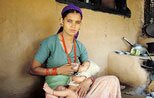 With a substantial development of research and findings for breastfeeding over the past three decades, we are now able to expand on the health benefits for both women and children across the globe. The two papers in this Series will describe past and current global trends of breastfeeding, its short and long-term health consequences for the mother and child, the impact of investment in breastfeeding, and the determinants of breastfeeding and the effectiveness of promotion interventions.
 Infant Feeding Support for Refugee Children – #SafelyFed
 Infant Feeding Support for Refugee Children